Introduction
If you’re heading to St Barthélemy (St Barts) and love photography, you’re in for a treat. The island is a dream for photographers – white-sand beaches, turquoise lagoons, luxury villas, and the charm of Gustavia harbor at sunset. As a local fine-art photographer in St Barth, I’ve spent years chasing the perfect light from St Jean Beach to Toiny, and I’m sharing my favorite St Barth photography tips so you can capture it like a pro.
1. Work with Natural Light
Light is everything in photography. In St Barth, the golden hour—just after sunrise or before sunset—offers the most flattering tones for beaches like St Jean, Saline, and Colombier.
Avoid shooting at midday when the sun is harsh, unless you are going for high-contrast water reflections around Shell Beach or Grand Cul-de-Sac Lagoon.
For aerial or drone photography, early morning light over Rémy de Haenen Airport reveals remarkable colors and textures.
Use a polarizing filter to reduce glare and deepen the blues of the Caribbean Sea.
2. Explore Hidden and Less-Known Locations
Beyond the well-known landmarks such as Eden Rock and Nikki Beach, there are many lesser-known sites worth discovering:
- Pointe Milou for dramatic coastal sunsets.
- Grand Fond for its volcanic textures and powerful waves.
- Lorient Beach for surf photography and local character.
- Corossol Village for its colorful fishing boats and traditional homes.
Combining luxurious scenery with authentic daily life creates more meaningful and distinctive travel photographs.
3. Create a Narrative Through Your Photos
The most memorable images tell a story. Rather than only photographing landscapes, focus on moments that convey atmosphere:
- A Mini Moke parked by the roadside.
- Residents gathered in Gustavia at dusk.
- Glasses of champagne at Shellona during sunset.
Candid scenes add a human dimension and help express the island’s true identity.
4. Observe and Photograph Like a Local
Timing and perspective are crucial. Locals know the right moments to shoot:
- Early mornings at St Jean Beach for calm reflections.
- Late afternoons at Gustavia Harbor for light on the water.
- Nighttime views from Fort Karl for atmospheric cityscapes.
Visitors who wish to refine their technique may consider a private photo session or workshop in St Barth, where they can learn composition and lighting on location.
5. Edit with Subtlety and Respect for the Scene
When editing, focus on tone and mood rather than artificial enhancement.
Preserve the island’s natural palette—soft blues, warm sands, and balanced contrast.
Applications such as Lightroom Mobile or Snapseed work well for travel adjustments, while RAW editing on a computer allows for greater precision.
Avoid oversaturation, as St Barth’s light already provides exceptional color depth.
6. Recommended Photo Locations in St Barth
For travelers seeking unique compositions, consider these viewpoints:
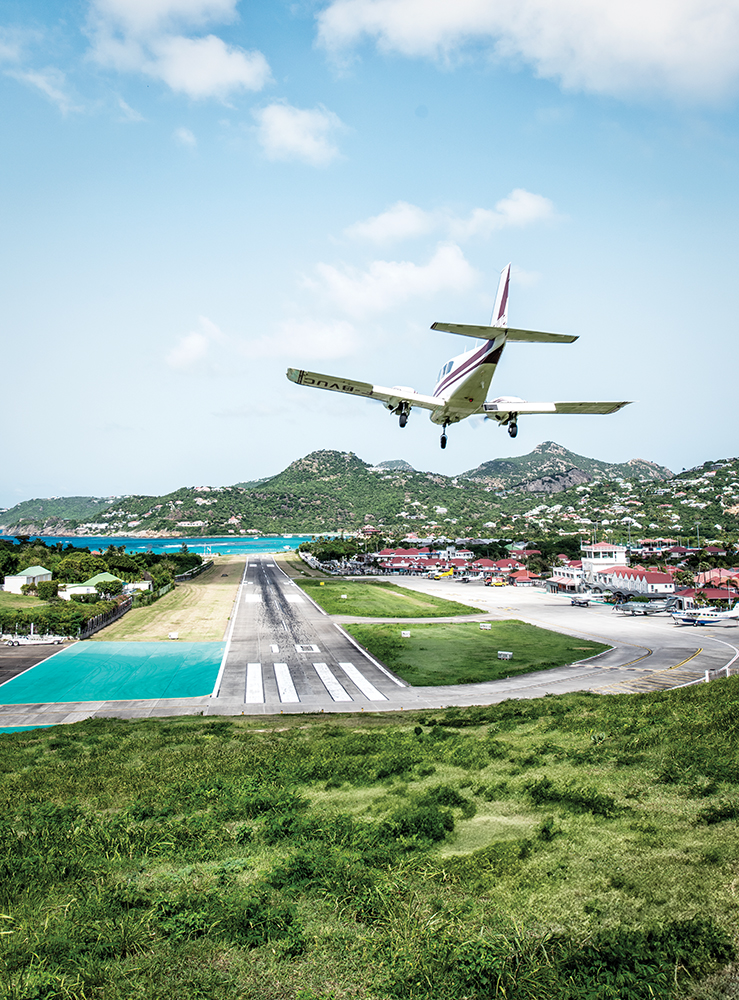
- Airport Hill above St Jean Bay for the iconic aerial perspective.
- Colombier Hilltop for panoramic landscapes.
- Eden Rock from the water for architectural elegance.
- Gustavia on New Year’s Eve for fireworks and reflections.
- Toiny Road Signs for minimalist creative shots.
- The Lighthouse for memorable sunsets and Gustavia views
These locations combine natural beauty and cultural identity, ideal for both travel journals and fine-art prints.
Conclusion
St Barthélemy is more than a tropical destination – it is a living canvas for photographers. By mastering light, timing, and composition, you can create images that capture both the island’s luxury and authenticity.
To see how these principles come to life, explore my Fine Art Photography Collections